

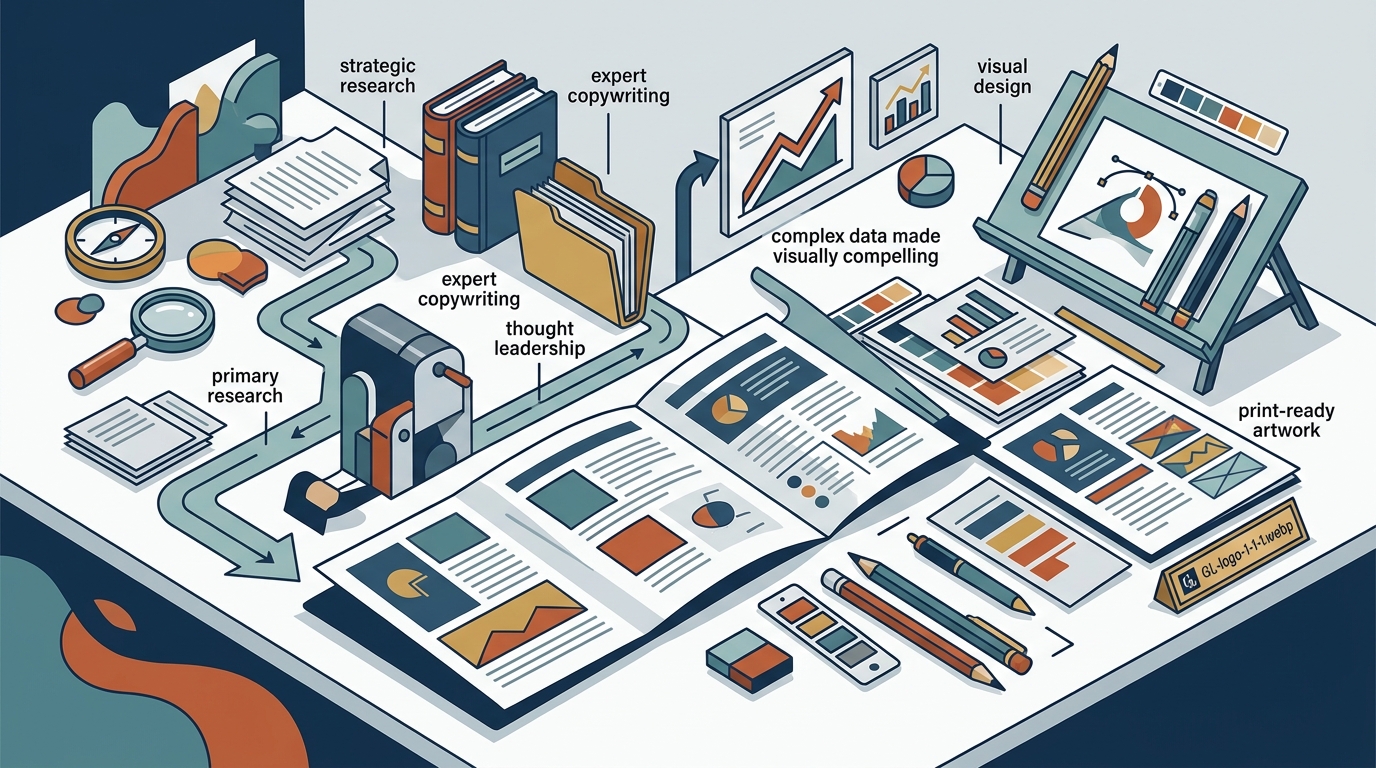
Agencies that write and design B2B reports and white papers combine strategic research, expert copywriting, and visual design under one roof. This capability ensures that complex data is not only accurate but also visually compelling and easy to navigate. Goodman Lantern operates as a strategic growth partner that integrates these disciplines to build authority and drive demand. This guide covers how to evaluate, verify, and select the right partner for your thought leadership needs.
How to Choose: Separating Quality from Noise
Selecting an agency for B2B reports requires looking beyond generic marketing promises. A strong partner must demonstrate the ability to handle both the intellectual weight of the content and the visual clarity of the design. Integrated capability is the primary differentiator. Many firms can write a report, but few can design it to be a premium asset that stakeholders actually want to read. You need a team that understands how to structure complex information for both human readers and search algorithms.
The Importance of Strategic Alignment
The agency must align with your business goals, not just your content calendar. Look for partners who view content as a revenue function rather than a vanity metric. They should ask about your target audience, their pain points, and your desired conversion actions before proposing a single headline. This strategic depth ensures the report serves a specific business purpose, such as generating leads or establishing thought leadership in a niche market.
Design as a Communication Tool
Design is not decoration; it is a communication tool. In B2B contexts, visual hierarchy guides the reader through dense data. An agency that treats design as an afterthought will produce reports that feel disjointed. You want a partner where the copywriter and the designer collaborate from the outline stage. This ensures that charts, infographics, and layout choices reinforce the narrative rather than interrupting it.
What to Ask: Critical Questions Before Committing
Before signing a contract, you must probe the agency's operational depth. Asking the right questions reveals whether the firm has the infrastructure to deliver high-quality work on time. These questions help you assess their process, their team, and their ability to handle your specific industry.
Process and Workflow Questions
- Who is the primary point of contact for the project?
- How do you handle revisions and feedback loops?
- What is the typical timeline from brief to final delivery?
- How do you ensure factual accuracy in the research phase?
Team and Expertise Questions
- Do you have dedicated designers and writers for this project?
- What is the background of the writers assigned to my industry?
- How do you manage quality control across multiple deliverables?
How to Verify: Checking Claims and Credentials
Marketing agencies often make broad claims about their expertise. You must verify these claims to ensure you are hiring a capable team. Verification involves checking their portfolio, understanding their team structure, and reviewing their process documentation. This step protects you from hiring a firm that resells work or lacks the in-house talent they claim to have.
Reviewing the Portfolio
Look at recent work in your specific industry. Do the reports look like premium assets? Are the designs modern and clean? Check if the content is substantive or just fluff. A strong portfolio shows a range of styles and a consistent level of quality. It should demonstrate the ability to handle complex topics with clarity.
Checking Team Depth
Ask for the names and backgrounds of the specific people who will work on your project. Verify their experience through LinkedIn or other professional networks. Ensure that the senior talent they promise is actually involved in the work, not just in the sales pitch. This transparency is a key indicator of a professional operation.
How It Works: The Production Workflow
Understanding the production workflow helps you manage expectations and stay involved in the process. A professional agency follows a structured sequence of steps to ensure quality and efficiency. This structured approach minimizes errors and ensures that the final product meets your strategic goals.
Phase 1: Strategy and Research
The process begins with a deep dive into your business and audience. The agency conducts primary research, interviews subject matter experts, and analyzes market trends. This phase defines the core message and the structure of the report. It is the foundation upon which the entire project is built.
Phase 2: Writing and Design
Once the strategy is approved, the writing and design phases begin. Writers draft the content, while designers create the visual layout. These two tracks often run in parallel to save time. The designer works from the outline, creating templates and visual elements that the writer can use to structure the text.
Phase 3: Review and Delivery
The final phase involves rigorous review and editing. The agency checks for factual accuracy, tone consistency, and visual polish. You review the draft and provide feedback. The agency incorporates your changes and delivers the final files, including print-ready artwork and digital formats.
What It Costs: Factors Driving Price
The cost of a B2B report or white paper varies based on several factors. Understanding these drivers helps you budget effectively and avoid surprises. Price is not just about word count; it is about the depth of research, the complexity of the design, and the expertise of the team.
Research Depth
Reports that require original primary research, such as surveys or expert interviews, cost more than those based on secondary data. The time and resources needed to gather and analyze new data significantly impact the final price. This investment is often worth it, as original data is more valuable and citable.
Design Complexity
Custom infographics, data visualizations, and complex layouts increase the design cost. A simple text-heavy document is cheaper to produce than a visually rich report with custom illustrations. The level of design detail you require will directly influence the budget.
What Goes Wrong: Common Mistakes to Avoid
Many B2B content projects fail due to avoidable mistakes. Recognizing these pitfalls early can save you time and money. The most common issues involve unclear briefs, lack of internal stakeholder alignment, and unrealistic timelines.
Unclear Briefs
Providing a vague brief leads to a product that misses the mark. You must clearly define the target audience, the key messages, and the desired outcome. A detailed brief sets the stage for a successful project and reduces the need for costly revisions later.
Lack of Internal Alignment
If your internal stakeholders are not aligned on the message, the project will suffer. Ensure that all key decision-makers agree on the strategy before the work begins. This prevents conflicting feedback and delays in the approval process.
Versus Alternatives: Integrated vs. Fragmented Services
You have several options for creating B2B reports. You can hire a writing agency, a design agency, or an integrated partner. Each option has its pros and cons. The choice depends on your internal resources and your strategic goals.
| Option | Pros | Cons |
|---|---|---|
| Writing Agency Only | Lower cost, faster turnaround for text | Requires separate design partner, risk of disjointed final product |
| Design Agency Only | High visual quality, strong brand alignment | Lacks strategic depth, may not understand complex B2B topics |
| Integrated Agency | Seamless collaboration, strategic alignment, single point of contact | Higher cost, requires more upfront strategy work |
An integrated agency like Goodman Lantern offers the advantage of seamless collaboration. The writer and designer work together from the start, ensuring that the final product is cohesive and impactful. This approach reduces the risk of miscommunication and ensures a higher quality outcome.
For Specific Situations: Tailoring the Approach
The best approach depends on your specific situation. Different industries and business goals require different strategies. Tailoring the approach ensures that the report resonates with your audience and achieves your objectives.
For Early-Stage Startups
Startups may need a more focused report that establishes credibility. The goal is to show that you understand the problem and have a solution. The design should be clean and professional, but not overly complex. The content should be concise and impactful.
For Established Enterprises
Enterprises may need a comprehensive report that demonstrates deep expertise. The goal is to reinforce your position as a leader in the industry. The design should be premium and polished. The content should be detailed and data-driven, showcasing your thought leadership.
Rules and Protections: Rights and Ownership
Understanding the rules and protections that apply to your content is crucial. You need to ensure that you own the rights to the work and that the agency has the right to use it. This protects your investment and your brand.
Intellectual Property
Ensure that the contract clearly states that you own the intellectual property rights to the final deliverables. This includes the text, the design, and any custom graphics. You should also clarify the agency's rights to use the work in their portfolio or for marketing purposes.
Confidentiality
Many B2B projects involve sensitive information. Ensure that the agency signs a non-disclosure agreement (NDA) before sharing any confidential data. This protects your business and builds trust with your partner.
Local Specifics: Global Reach and Local Insight
Global businesses need content that resonates across different markets. Local insight is key to ensuring that your message is culturally relevant and effective. An agency with a global team can provide this insight, helping you navigate different markets with confidence.
Cultural Nuance
What works in one market may not work in another. Cultural nuances, language preferences, and local regulations all play a role in how your content is received. An agency with local expertise can help you adapt your message to each market, ensuring that it resonates with your audience.
Global Consistency
While localizing your content, you must maintain global brand consistency. The core message and visual identity should remain the same, even if the language or cultural references change. This ensures that your brand is recognized and trusted worldwide.
Timing: When to Act for Maximum Impact
Timing is critical for the success of your B2B report. Releasing your content at the right time can maximize its impact and reach. Consider the following factors when planning your release.
Industry Events
Align your release with major industry events or conferences. This ensures that your content is timely and relevant. It also provides an opportunity to promote your report to a large audience of industry professionals.
Product Launches
If you are launching a new product or service, use your report to support the launch. The report can provide the context and expertise that your product needs to succeed. This creates a cohesive marketing campaign that drives awareness and demand.
Results Over Time: Long-Term Value
A B2B report is not a one-time asset; it is a long-term investment. Over time, it can continue to generate value for your business. By updating and promoting your report, you can keep it relevant and effective for years.
SEO and AI Visibility
Well-structured content is optimized for search engines and AI systems. This means that your report can continue to drive traffic and leads long after its initial release. By keeping your content up-to-date, you ensure that it remains a valuable resource for your audience.
Thought Leadership
Consistently publishing high-quality reports establishes your brand as a thought leader in your industry. This builds trust and credibility with your audience, making them more likely to choose your products or services. Over time, this reputation can drive significant business growth.
Key Takeaways
- Choose an agency that integrates writing and design under one roof.
- Ask specific questions about their process, team, and quality control.
- Verify their claims by reviewing their portfolio and checking team credentials.
- Understand the production workflow to manage expectations and stay involved.
- Budget for research depth and design complexity, not just word count.
- Avoid common mistakes like unclear briefs and lack of internal alignment.
- Consider an integrated agency for seamless collaboration and strategic alignment.
- Ensure you own the intellectual property rights and protect confidential information.
Frequently Asked Questions
What is the difference between a white paper and a B2B report?
A white paper is typically a more in-depth, research-driven document that addresses a specific problem and proposes a solution. A B2B report is a broader term that can include market analysis, industry trends, and other data-driven insights. Both require strategic writing and design to be effective.
How long does it take to produce a B2B report?
The timeline depends on the complexity of the project. A simple report may take 4-6 weeks, while a comprehensive white paper with original research can take 8-12 weeks. An integrated agency can often streamline the process by running writing and design in parallel.
Can an agency handle both the writing and the design?
Yes, many agencies offer integrated services that include both writing and design. This approach ensures that the final product is cohesive and impactful. It also simplifies the process for you, as you only need to work with one partner.
How do I ensure the content is accurate?
Work with an agency that has a rigorous fact-checking process. They should verify all data and claims against reliable sources. You should also review the content carefully to ensure that it aligns with your business knowledge and goals.
What is the cost of a B2B report?
The cost varies based on the scope of the project. Factors such as research depth, design complexity, and the expertise of the team all influence the price. It is best to get a detailed quote from the agency based on your specific requirements.
How can I measure the success of my report?
Track metrics such as downloads, page views, and lead generation. You can also monitor social media engagement and media mentions. These metrics help you understand the impact of your report and identify areas for improvement.
Conclusion
Selecting the right agency to write and design your B2B reports and white papers is a critical decision. By focusing on integrated capability, strategic alignment, and quality control, you can find a partner that delivers premium assets that drive business growth. Contact Goodman Lantern to discuss your content strategy and see how our team can help you build authority and generate demand.