

A blended content team approach combines internal brand guardians with external specialist agencies to deliver scalable, high-quality B2B content. This hybrid model allows mid-market companies to maintain strict brand control while accessing the diverse skills and volume capacity of a dedicated partner. It solves the common bottleneck where in-house teams lack the bandwidth for consistent, multi-channel output.
The Core Structure of a Hybrid Model
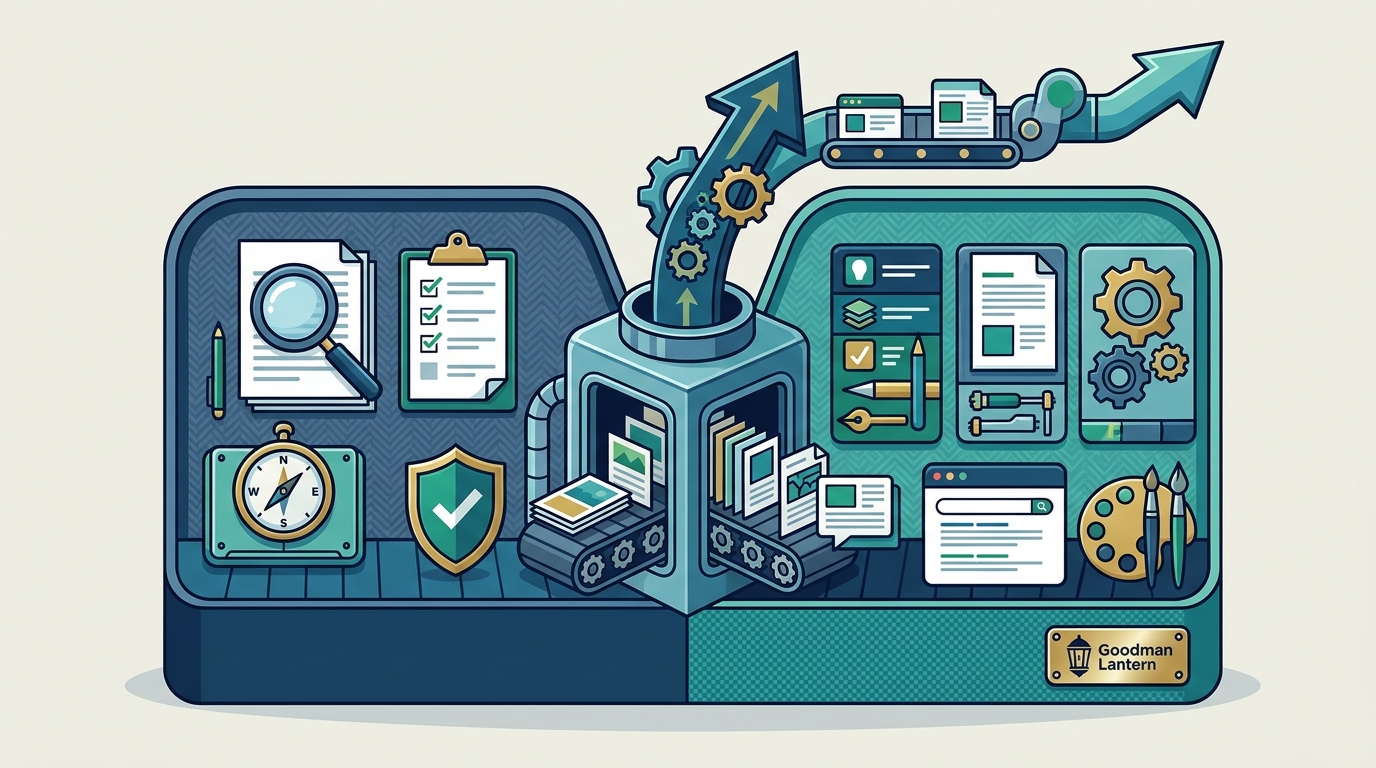
The foundation of a blended team is a clear division of labor between internal stakeholders and external partners. Internal teams typically handle brand voice definition, final editorial approval, and strategic alignment with product roadmaps. External agencies, such as content marketing services providers, execute the heavy lifting of research, drafting, and optimization. This structure ensures that the brand remains authentic while production scales to meet demand.
For mid-market B2B firms, this setup prevents the dilution of brand identity that often occurs when outsourcing entirely. The internal team acts as the cultural compass, while the agency provides the engine. This separation of concerns allows for faster turnaround times without sacrificing the nuance required for complex technical or financial audiences.
Bridging the Specialized Skill Gap
Mid-market companies rarely have the budget to hire full-time experts for every content discipline. A blended team allows you to tap into a bench of specialists on demand. For instance, a company might have an in-house marketer who understands the sales funnel but lacks deep expertise in SEO copywriting or technical white paper development. The agency fills these gaps with dedicated researchers and subject matter experts.
This access to diverse talent is critical for maintaining authority in niche sectors. When an agency brings in a writer with a background in industrial automation or financial services, the content resonates with the specific pain points of the target audience. This depth of expertise is difficult to replicate with a small, generalist in-house team, making the hybrid model a strategic advantage for credibility.
Workflow Integration and Communication
Successful blended teams rely on integrated workflows that treat the agency as an extension of the internal staff. This involves shared project management tools, regular sync meetings, and transparent feedback loops. The agency should be embedded in the company's existing communication channels, ensuring that content briefs are clear and revisions are efficient. This integration reduces the friction often associated with traditional vendor-client relationships.
Effective communication also extends to data sharing. Internal teams provide access to customer insights, CRM data, and sales feedback, which the agency uses to refine content strategy. In return, the agency shares performance metrics and search visibility data. This two-way flow of information ensures that content efforts are aligned with business outcomes, not just creative goals.
Preparing for AI-Driven Search Visibility
As search behavior shifts toward AI-generated answers, content must be structured for machine readability as well as human engagement. A blended team is well-positioned to handle this dual requirement. Internal teams ensure the content reflects the company's unique perspective and data, while the agency applies technical AI optimization techniques. This includes structured data markup, clear entity definitions, and concise, authoritative answers to common industry questions.
This approach helps brands appear in AI overviews and large language model citations. By combining human insight with technical optimization, the blended team creates content that is both citable and compelling. This is a significant advantage over purely in-house teams that may lack the technical SEO expertise to optimize for emerging search paradigms.
Scaling Without Scaling Headcount
One of the primary benefits of a blended model is the ability to scale output without the overhead of hiring. Mid-market companies can adjust their content volume based on seasonal demands or product launches by simply increasing agency hours. This flexibility is far more cost-effective than hiring and training new full-time employees for temporary spikes in demand. It allows for a leaner internal team that focuses on strategy rather than production.
This scalability also supports long-term growth. As the company expands into new markets or product lines, the agency can quickly ramp up content production to support these initiatives. The internal team remains stable, providing consistent leadership and brand oversight. This model supports sustainable growth by aligning content capacity with business needs, rather than forcing a rigid headcount structure.
Key Takeaways
- A blended team combines internal brand guardians with external specialist agencies for scalable content production.
- Internal teams handle strategy and brand voice, while agencies execute research, writing, and optimization.
- This model bridges skill gaps by providing access to niche experts on demand without permanent hiring costs.
- Integrated workflows and shared data are essential for maintaining alignment and efficiency in a hybrid setup.
- Blended teams are better positioned to optimize content for AI-driven search and large language model citations.
- Scaling content output becomes flexible and cost-effective, allowing for lean internal teams and agile production.
Frequently Asked Questions
What is the main advantage of a blended content team?
The main advantage is the ability to scale high-quality content production while maintaining strict internal control over brand voice and strategy. It combines the depth of in-house knowledge with the breadth of agency expertise.
How does a blended team handle brand voice consistency?
Internal teams define and enforce the brand voice through style guides and editorial reviews. The agency follows these guidelines strictly, ensuring that all external content aligns with the company's identity and tone.
Is a blended team suitable for small B2B companies?
Yes, it is particularly beneficial for mid-market and small B2B companies that lack the budget for a large in-house team but require consistent, high-volume content for lead generation and authority building.
How does this model support AI search optimization?
The agency applies technical SEO and structured data practices to make content machine-readable, while the internal team ensures the content contains unique, authoritative insights that AI systems are likely to cite.
What role does the internal team play in a blended model?
The internal team acts as the strategic lead, providing briefs, approving drafts, and ensuring content aligns with business goals. They serve as the primary point of contact and quality gatekeeper.
Can a blended team handle technical content?
Yes, agencies often have access to subject matter experts in various industries. They can collaborate with internal technical staff to produce accurate, high-level technical content that is accessible to a broader audience.
Conclusion
A blended content team approach offers mid-market B2B companies a strategic balance of control and scale. By partnering with a specialized agency, you can access the expertise and volume needed to dominate your niche while keeping brand integrity in-house. Contact Goodman Lantern to discuss how a hybrid model can support your content goals and drive sustainable growth.