

Understanding the Cost Drivers of Primary Research
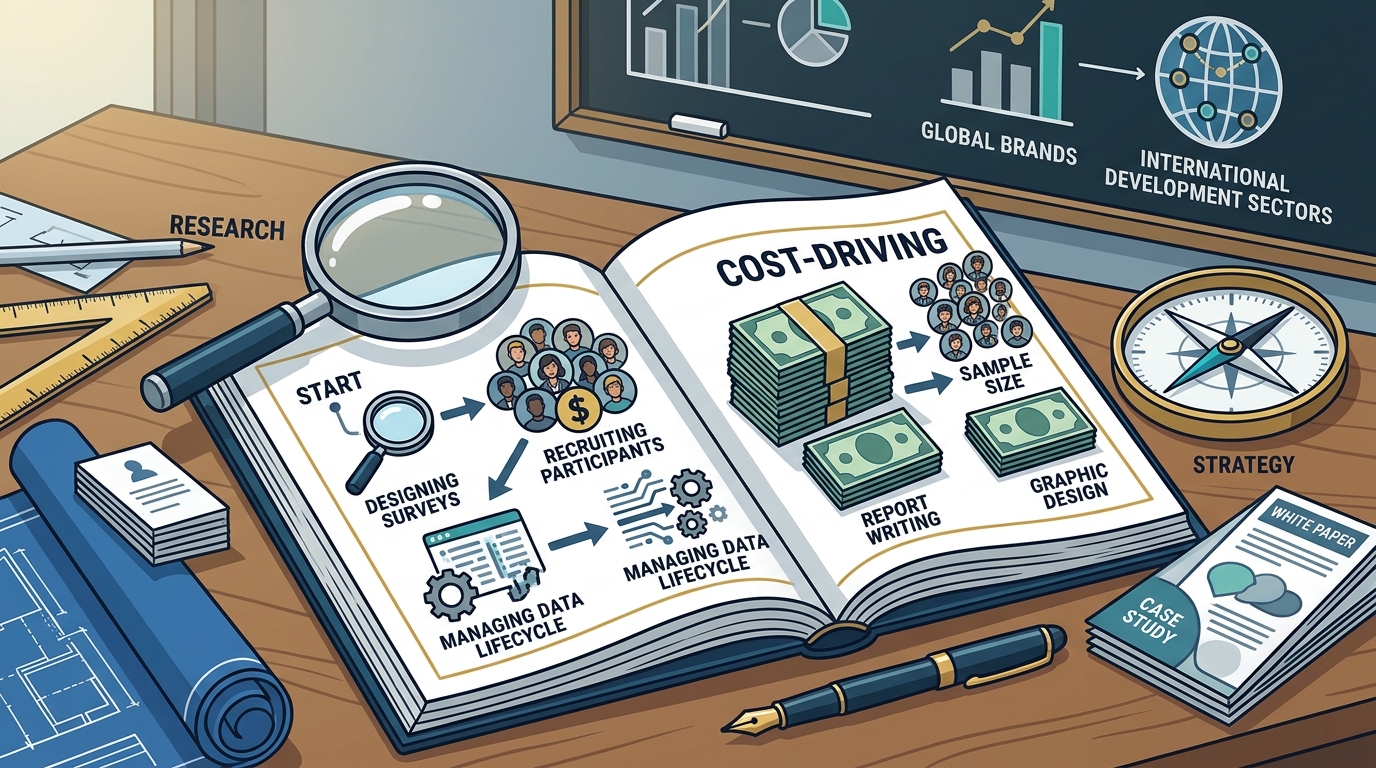
Original research is the systematic collection and analysis of first-hand data to answer specific business questions. Unlike secondary research, which relies on existing data, primary research requires direct interaction with your target audience. This process is resource-intensive because it involves designing surveys, recruiting participants, and managing the data lifecycle. The most significant cost driver is among the sample size. Reaching 100 respondents is vastly different from reaching 1,000, especially in niche B2B sectors where qualified leads are hard to find.
Recruitment costs often account for 40% to 60% of the total budget. If you are targeting C-suite executives in a specific industry, the cost per respondent can be significantly higher than for general business users. Agencies must invest in sophisticated panel management or direct outreach to ensure the data is valid. This is why a small, high-quality study often provides more value than a large, low-quality one. Understanding these drivers helps you avoid overpaying for data you do not need.
Defining the Scope: From Survey to White Paper
Consider the difference between a data dump and a strategic narrative. A data dump lists statistics, while a strategic narrative explains why those statistics matter. The latter requires more time from senior analysts and writers. If your goal is to generate leads, the content must be engaging and easy to digest. This level of polish adds to the cost but increases the return on investment. You are paying for the ability to convert readers into prospects, not just for the raw numbers.
Agency Models and Pricing Structures
B2B agencies typically offer two main pricing models: project-based and retainer-based. Project-based pricing is common for one-off research studies. You pay a fixed fee for the entire project, from kickoff to final delivery. This model provides budget certainty and is ideal for specific, time-bound goals. Retainer-based pricing involves a monthly fee for ongoing content and research support. This model is better for brands that need a continuous stream of insights and content assets.
When comparing agencies, look at what is included in the base price. Some agencies charge extra for data analysis, while others include it in the standard fee. Similarly, design and layout costs can vary. Goodman Lantern offers transparent pricing that includes strategy, research, writing, and design. This all-inclusive approach prevents hidden costs from creeping into your budget. It ensures that the final deliverable is ready for distribution without additional fees.
Aligning Research Costs with Business Goals
The cost of research should be viewed as an investment in brand authority. In the B2B space, trust is the primary currency. Original research positions your brand as a thought leader and a source of truth. This authority can lead to increased organic traffic, higher conversion rates, and stronger sales conversations. The return on investment comes from the long-term value of the content. A well-executed research project can be repurposed into blog posts, social media updates, and sales collateral.
To maximize value, align the research topic with a specific business challenge. For example, if your sales team struggles to close deals in a new market, a study on buyer behavior in that market can provide the insights needed to refine your pitch. This targeted approach ensures that the research has a clear purpose and a measurable impact. It moves the project from a marketing expense to a strategic asset. By focusing on high-impact questions, you justify the cost and demonstrate the value of the investment.
Key Takeaways
- Recruitment is the most expensive component, often accounting for the majority of the budget.
- The deliverable format, such as a white paper, significantly impacts the final price.
- Project-based pricing offers budget certainty, while retainers support ongoing content needs.
- Transparent pricing models that include strategy, writing, and design prevent hidden costs.
- Aligning research with specific business goals maximizes the return on investment.
Frequently Asked Questions
How long does it take to complete a B2B research project?
A typical B2B research project takes 6 to 12 weeks from kickoff to final delivery. This timeline includes planning, data collection, analysis, and content production. Complex projects with larger sample sizes may take longer.
What is the difference between primary and secondary research?
Primary research involves collecting new data directly from your target audience, while secondary research uses existing data from other sources. Primary research is more expensive but provides unique insights that competitors do not have.
Can I use the research data for other purposes?
Yes, the data collected during the project is typically owned by the client. You can use it for internal analysis, sales presentations, or future marketing campaigns. This extends the value of the investment beyond the initial deliverable.
How do I choose the right sample size?
The sample size depends on the precision you need and the size of your target population. For B2B research, a sample of 100 to 300 respondents is often sufficient to draw meaningful conclusions. Larger samples provide more statistical power but increase costs.
Is original research worth the cost for small businesses?
Yes, original research can be a powerful tool for small businesses to establish authority in their niche. It differentiates your brand from larger competitors and provides valuable insights that can drive growth. The key is to focus on a specific, high-impact topic.
Conclusion
Commissioning original research is a strategic investment that can significantly enhance your brand's authority and drive business growth. By understanding the cost drivers and aligning the project with your business goals, you can maximize the return on your investment. Goodman Lantern provides expert guidance and transparent pricing to help you achieve your research objectives. today to discuss your project and receive a customized proposal. according to Commissioning in Federal